Mahjong Mingle
- 4.8
- Rating
- 5.00M
- Installs
- Free
- Price

 Analysis by App-foxy
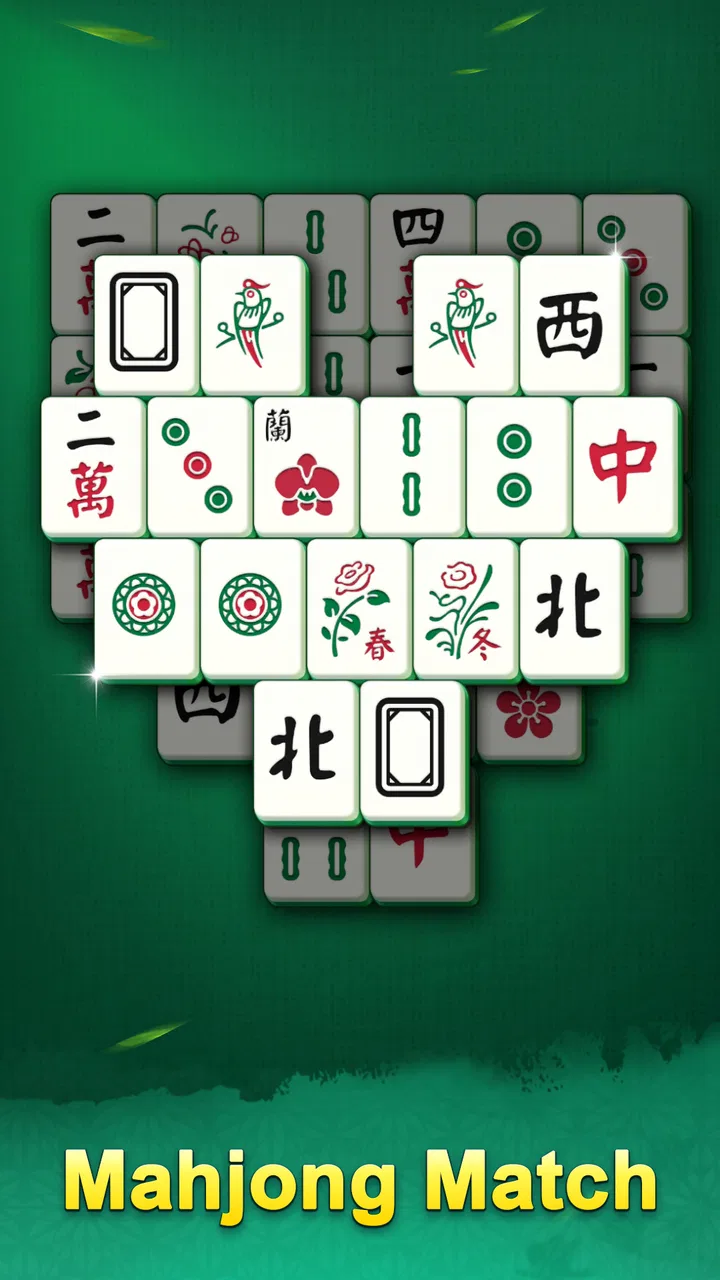
I found Mahjong Mingle easy to understand within a few minutes, but not so shallow that it felt disposable. It is a board game from Playful Bytes built around the familiar Mahjong tile-matching format, with large tiles and a calm presentation that make it especially approachable for older players or anyone who prefers a less visually demanding puzzle. I would describe it as a quiet, low-pressure game for short breaks rather than a competitive challenge.
That distinction matters when deciding whether it belongs on a shared household device. In my experience, this is the kind of game someone can open after breakfast, play a little while waiting for an appointment, or hand to a relative who does not enjoy fast controls. It is free, rated for Everyone, and available for devices running Android 8.0 or later. Those details make it easy to consider for a family tablet, although the practical experience still depends on how several people share that device.
How Mahjong Mingle works in a shared household
The central activity is familiar: I look for matching Mahjong tiles and clear them from the board. The large tile design is the most immediately useful part of the presentation. Symbols are easier to distinguish than they would be on a cramped layout, so I spend less time squinting and more time thinking about which pairs are available. That makes the game suitable for a relaxed session on a phone, while a larger tablet can make the experience even more comfortable for someone with tired eyes or less confidence using touchscreens.
You May Also Like

 Blood Strike: 2.5 Anniversary
Blood Strike’s Loadouts Turn Every Drop Into a Tactical Gamble
A close look at Blood Strike’s custom loadouts: how fast access to signature weapons reshapes its battle royale rhythm, rewards preparation, and narrows the gap between fights.

 Pandora - Music & Podcasts
Pandora’s Music Is Easy to Start, but Harder to Recover
Pandora’s strength is its low-effort path from a seed to a station. Its weak spot is how much confidence it asks you to place in connection, setup, and quiet recovery.

 8 Ball Pool
 Is Built on Rivalries, Rematches, and Routine
A close look at the rivalries, rematches, shared routines, and unanswered safety questions that turn a quick pool match into a persistent mobile community.

 Samsung Music
’s Quiet Strength Is Playing What You Already Own
Its reach comes less from spectacle than from dependable access to a personal library. That simplicity is both the app’s strongest retention engine and its ceiling.

 AccuWeather: Weather Radar
AccuWeather Review: A Quick, Clear Forecast for Everyday Decisions
For everyday plans, the best forecast is the one you can understand quickly. AccuWeather makes rain timing, radar, and local conditions easy to act on, with a few trade-offs.

 Hill Climb Racing
Why Hill Climb Racing Still Turns Crashes Into One More Run
A tiny car, a bumpy hill and one more upgrade: Hill Climb Racing keeps resurfacing because its simple chaos makes every near-miss feel personal.
More From Our News Desk



A realistic household example would be a tablet kept in the living room. One person might use it for news, another for video calls, and an older family member might open this game in the evening. Mahjong Mingle fits that pattern because it does not require a complicated explanation before someone can begin. I could show a new player the matching idea, point out the larger tiles, and let them learn the rest by playing rather than reading a long tutorial.
The strongest shared-device benefit is its low social pressure. If one person is interrupted, the game is more compatible with being put down than a live multiplayer board game or a timed competitive title. That makes it a better choice for a household where people may be called away to answer the door, prepare food, or help someone else. I would still avoid assuming that every session is automatically safe to interrupt, since the value of a move can depend on the current board arrangement.
It also works well as a handoff game. A family member can complete a puzzle and pass the device to someone else without needing to explain a complex control scheme. However, I would establish a simple household habit: each player should finish or deliberately leave their current board before handing over the device. That avoids confusion about whether a puzzle was solved by one person or another, especially when several players enjoy the same calm routine.
Compared with a physical Mahjong set, the appeal is convenience. There are no loose tiles to arrange, no table space to reserve, and no cleanup after a short session. Compared with a traditional Mahjong game played with other people, the experience is much more solitary. It is closer to a personal matching puzzle than to a social tile game, so anyone looking for conversation, strategy across several players, or the ritual of setting up a real set should choose the physical alternative instead.
What to decide before installing it on a family device
Because the game is free, the first decision is not financial; it is whether the device is suitable for shared use. I would check that the screen is large enough for the intended player and that touch input feels dependable. Large tiles help, but they cannot fully compensate for a small display, a cracked screen, or a device that registers taps inconsistently. A short trial session is more useful than judging the game from its title alone.
The age rating of Everyone makes the game broadly approachable, but an age label is not the same as a complete household policy. A young child, an older adult, and a person with limited dexterity may all interact with the same board differently. I would introduce the game personally to anyone who is unsure about touch controls, rather than leaving them to work out every gesture alone.
Account boundaries deserve attention too. On a shared device, I would not assume that every player has a separate profile, personal progress area, or independent history. The safest approach is to treat the device as a common play space unless the game visibly offers a way to separate users. That means family members should agree on whether everyone uses the same session and whether one person may reset or continue a board started by someone else.
This is a small point, but it prevents a surprisingly common source of frustration. A puzzle game can feel personal even when it is installed on a communal tablet. Someone may remember a particular board or want to solve it without help. If the household has more than one regular player, I would use a simple spoken rule: announce when a board is in progress and avoid tapping through another person’s session without asking.
For an older relative, the best setup is usually practical rather than technical. Put the device on a stable surface, keep the screen free from glare, and make sure the player has enough time to inspect the tiles. The large-tile design supports this approach, but the surrounding environment still matters. A bright window, a low battery, or a tablet balanced awkwardly on a lap can make an otherwise comfortable puzzle needlessly tiring.
Coordinating turns without turning a calm game into a chore
Mahjong Mingle is not the sort of game I would schedule like a board-game night. Its strength is that it can fit around household routines. One person might play while waiting for tea, then another might use the device later. That flexibility is useful, but it works best when the household agrees on where the device belongs and when it is available.
For a shared tablet, I would keep the charger nearby and return the device to the same place after playing. That sounds obvious, yet it matters more with older users who may not want to search for a missing tablet before every session. A consistent location also makes it easier for someone to ask for help without interrupting another activity elsewhere in the home.
I would also avoid making the game a test of memory or speed between relatives. The relaxed matching format is more enjoyable when players can compare approaches casually, such as discussing which tile pairs they noticed first. If one person is more experienced, they should explain a move only when invited. Taking over the board can remove the very independence that makes a simple puzzle satisfying.
One useful household routine is to use the game as a short transition activity rather than an open-ended distraction. For example, after finishing a meal, a family member could play one session before returning the tablet to its usual place. The point is not to impose a timer that the game itself may not provide; it is to create a predictable boundary around shared-device use.
This is also where Mahjong Mingle differs from many alternatives. A competitive online board game may create pressure to respond quickly or maintain a connection with other players. A physical puzzle book offers privacy and easy ownership, but it lacks the convenience of automatically presenting a tile board. A general matching game may be more colorful or energetic, yet it may not offer the same comfortable visual emphasis. I prefer this game when the goal is a quiet, screen-based puzzle that several people can take turns enjoying.
Who will appreciate the large-tile approach
The large tiles are not just a decorative choice. They change how the game feels for people who find dense mobile interfaces tiring. I can inspect the board more comfortably, and the layout is less intimidating for a first-time player. This makes it a sensible recommendation for seniors, people who prefer clear visual targets, and casual players who do not want to learn a complicated interface before solving a puzzle.
There is a trade-off, though. A larger visual presentation can make the board feel less compact, especially on a small phone. Players who enjoy tightly packed layouts or rapid scanning may prefer a more traditional Mahjong interface. The same design decision that helps one player can feel less elegant to another. I would choose the larger tiles for comfort, not for speed.
The Everyone rating also makes the game easy to place in a family context, but I would still match the experience to the person. A child who wants constant action may lose interest quickly. A teenager looking for online competition will probably find a multiplayer board game more rewarding. Someone who enjoys careful observation and repeated, peaceful puzzles is much more likely to appreciate what this title is trying to do.
For relatives who are nervous about games, I would present it as a matching activity rather than as a demanding strategy challenge. That framing reduces the fear of making a mistake. I would let the player explore the board at their own pace and resist correcting every choice. The game is most useful as a gentle introduction to touchscreen play when the player feels in control of the session.
It can also suit a household member who wants a private activity while others are watching television. The game does not require the whole room to participate, and its board-based format is easy to pause socially by simply putting the device down. That makes it more adaptable than a game whose enjoyment depends on everyone being available at the same moment.
Where the experience may not be enough
My main reservation is that the calm format will not satisfy everyone for long. If you want a deep campaign, a strong competitive ladder, or a story that changes from one session to the next, this is probably the wrong category of game. Its appeal comes from the immediate puzzle loop, not from narrative development or a large social ecosystem.
I would also skip it if your household specifically wants a shared game with clear player roles. Passing a device around can be pleasant, but it is not the same as sitting around a table with each person making decisions in a common match. For that use case, a physical Mahjong set or a dedicated multiplayer board game offers more conversation and a stronger sense of occasion.
Another limitation is the uncertainty that naturally comes with a communal device. Unless the game presents separate user areas during your own setup, I would not rely on it for carefully divided household progress. This is not necessarily a problem for casual play, but it matters if two people want independent records or dislike seeing another player’s unfinished board. I would decide that boundary before installing it, not after a disagreement.
The game is also less suitable for someone who struggles with touch accuracy but needs more than large visuals. Bigger tiles can improve targeting, yet they do not replace personal assistance or a device with responsive controls. If a player frequently taps the wrong area, I would test the game alongside them and see whether the interaction feels comfortable. If it does not, a physical tile set or paper puzzle may be kinder and less frustrating.
What its popularity and maintenance suggest
Playful Bytes has positioned this as an accessible board game, and its reception suggests that the approach has connected with a sizable audience. The game has an average rating of 4.8 from around 17 thousand ratings, with roughly 1.3 thousand written reviews. It has also passed one million installs, which gives me more confidence that it is not an obscure experiment with no active audience.
I would not treat those figures as a guarantee that every family member will enjoy it. Ratings are useful for spotting broad satisfaction, but they cannot answer the personal questions that matter most here: can your relative read the tiles comfortably, does your household need separate progress, and is a quiet solo puzzle actually what the player wants? Those are better answered by a hands-on trial.
The current version is 3.4.2, and the game was released on December 20, 2024. For someone choosing an app for an older phone or tablet, the minimum requirement of Android 8.0 or later is worth checking before installation. A device that meets the operating-system requirement may still offer a different experience depending on screen size, responsiveness, and battery condition, so I would test it on the actual shared device rather than assuming all compatible hardware feels identical.
The free price removes an important barrier for a household that wants to experiment. I can install it without first deciding whether it deserves a purchase, then remove it if the intended player does not connect with the format. That makes it especially practical for introducing a relative to mobile puzzles. Still, free access does not automatically make an app ideal for a shared tablet; the household should remain clear about who uses the device and how unfinished sessions are handled.
My household verdict
I would recommend Mahjong Mingle to a family looking for a calm, approachable puzzle that can live on a shared phone or tablet. The large tiles are the feature I would emphasize most when recommending it to an older relative. They make the board easier to inspect, and the familiar matching idea means a new player can begin without mastering a complicated ruleset.
My recommendation comes with a clear condition: treat it as a shared activity space, not automatically as a multi-user account system. Before handing over the device, decide whether players may continue one another’s boards, where the tablet will be stored, and who can help when a player is unsure what to tap. Those small agreements make the experience smoother than any informal assumption that everyone will simply know what to do.
I would choose this over a physical Mahjong set when convenience, low setup effort, and individual play matter most. I would choose a multiplayer alternative when the household wants conversation and direct competition. I would choose a paper puzzle or real tiles when screen use is tiring or touch interaction is unreliable. Knowing that difference is more important than calling one option universally better.
For me, the game succeeds because it keeps its purpose clear. It offers a quiet board-puzzle experience, presents the tiles in a welcoming way, and fits naturally into short household breaks. It is not the right answer for every player, but for seniors and casual users who want relaxed Mahjong-style matching on a device, Mahjong Mingle is an easy game to try and a sensible one to keep available.
In the end, I would install it on a shared household device when the family values simple routines over complex profiles or competitive features. I would introduce it patiently, give each player room to solve independently, and keep expectations modest. Used that way, Mahjong Mingle becomes more than a quick download: it is a comfortable little puzzle that can give different generations a low-pressure way to enjoy the same screen.
FAQs for Mahjong Mingle
01What is Mahjong Mingle and how is it played?
Mahjong Mingle is a modern twist on the classic tile-matching game that combines traditional Mahjong elements with innovative gameplay mechanics. Players must match pairs of tiles to clear the board, but with added challenges like time limits and special power-ups. It’s designed for both casual players and Mahjong enthusiasts.
02Are there in-app purchases in Mahjong Mingle?
Yes, Mahjong Mingle offers in-app purchases. Players can buy power-ups, additional lives, and special tile sets to enhance their gaming experience. While the game is free to download and play, these purchases can help players progress more quickly through challenging levels.
03Does Mahjong Mingle require an internet connection to play?
Mahjong Mingle can be played offline, allowing users to enjoy the game without a constant internet connection. However, an internet connection is needed for certain features like updates, leaderboards, and in-app purchases. This makes it convenient for play on-the-go or in areas with limited connectivity.
04How does Mahjong Mingle ensure user privacy and data security?
Mahjong Mingle adheres to strict privacy and data security protocols. The app collects minimal user data, primarily for improving gameplay and ensuring a personalized experience. All data collected is stored securely, and users can review the privacy policy for detailed information on data handling practices.
05Is Mahjong Mingle suitable for all ages?
Mahjong Mingle is designed to be family-friendly and suitable for players of all ages. The game’s intuitive interface and varying difficulty levels make it accessible for children, while still providing enough challenge for adults. Parents can feel confident allowing their kids to play this educational and entertaining game.
Pros
- Visually appealing design.
- Intuitive gameplay mechanics.
- Multiple difficulty levels.
- Engaging daily challenges.
- Offline play available.
Cons
- Limited customization options.
- Ads can be intrusive.
- Occasional lag on older devices.
- In-app purchases can be pricey.
- No multiplayer mode.

Mahjong Mingle
Gallery